Knee Ice Packs & Ice Sleeves: A Guide to Knee Recovery
Knee ice packs are commonly used by runners, athletes and active people as part of their post-training recovery routine. After running, gym training or sport, a knee ice pack provides a convenient way to apply targeted cold therapy around the knee.
Traditional gel ice packs for knees can work well, but the shape and movement of the knee can make them difficult to keep in position. That's why knee ice sleeves and compression ice wraps offer a convenient wearable alternative.
In this guide, we'll look at knee ice packs, gel packs and ice sleeves, and what to consider when choosing one for your recovery routine.
What Is a Knee Ice Pack?
A knee ice pack is designed to provide targeted cooling around the knee. Traditional options usually use a reusable gel pack that is chilled before being placed against the targeted area.
Because the knee is curved, a flat gel pack may only contact part of the knee at once and can shift unless it's held or strapped in position.
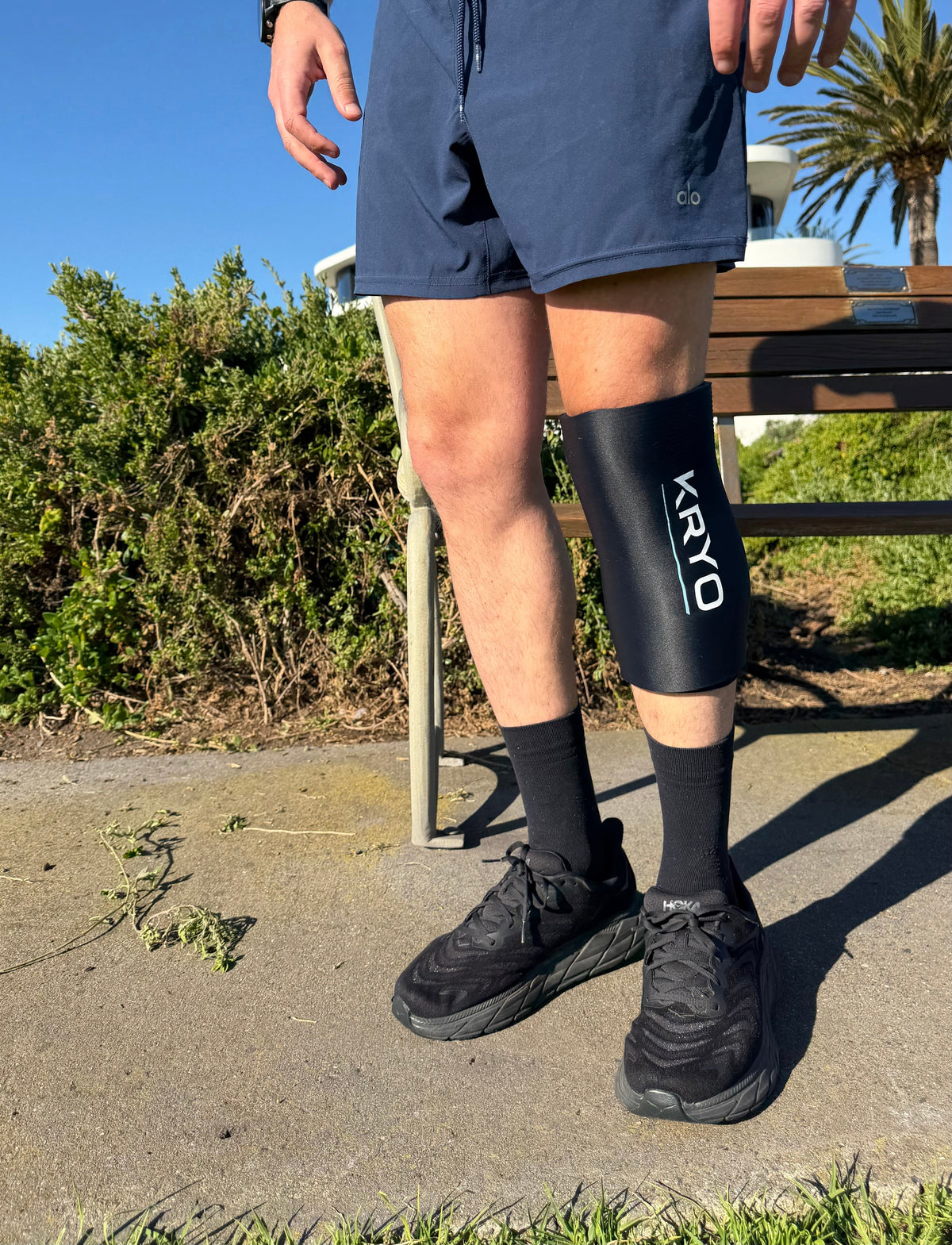
A knee ice sleeve takes a different approach. It wraps around the knee, helping keep the cooling material securely positioned while providing compression.
Knee Gel Ice Pack vs Knee Ice Sleeve
Both options provide targeted cooling, but there are some practical differences.
A traditional knee gel ice pack is simple and versatile, although it may need to be held or strapped against the knee.
A knee ice sleeve is shaped to fit around the leg, providing close contact with the targeted area without requiring separate straps or wraps.
For people who regularly use cold therapy after exercise, the convenience of a wearable sleeve can make it easier to incorporate into a regular recovery routine.
Knee Ice Packs After Running & Training
Running places repeated demands on the lower body, making the knees a common focus during post-run recovery.
A reusable knee ice pack or compression ice sleeve can be kept chilled and ready to use after:
- Running and race days
- Football and field sports
- Basketball and tennis
- Lower-body gym sessions
- Other high-impact training
What to Look for in a Knee Ice Pack
When comparing knee ice packs, gel packs and ice sleeves, consider:
Coverage: Look for good contact around the knee rather than cooling one small area.
Compression: A close-fitting sleeve can help keep the cooling material securely positioned.
Cooling gel: A substantial layer of gel provides greater thermal mass once chilled.
Fit: The sleeve should conform comfortably around your knee without feeling unnecessarily restrictive.
Reusability: For regular recovery, choose something designed to be chilled and reused repeatedly.
KRYO CORE: Knee & Calf Compression Ice Sleeve
The KRYO CORE is designed for the knee and calf and is the recommended KRYO sleeve for most people targeting the knee.
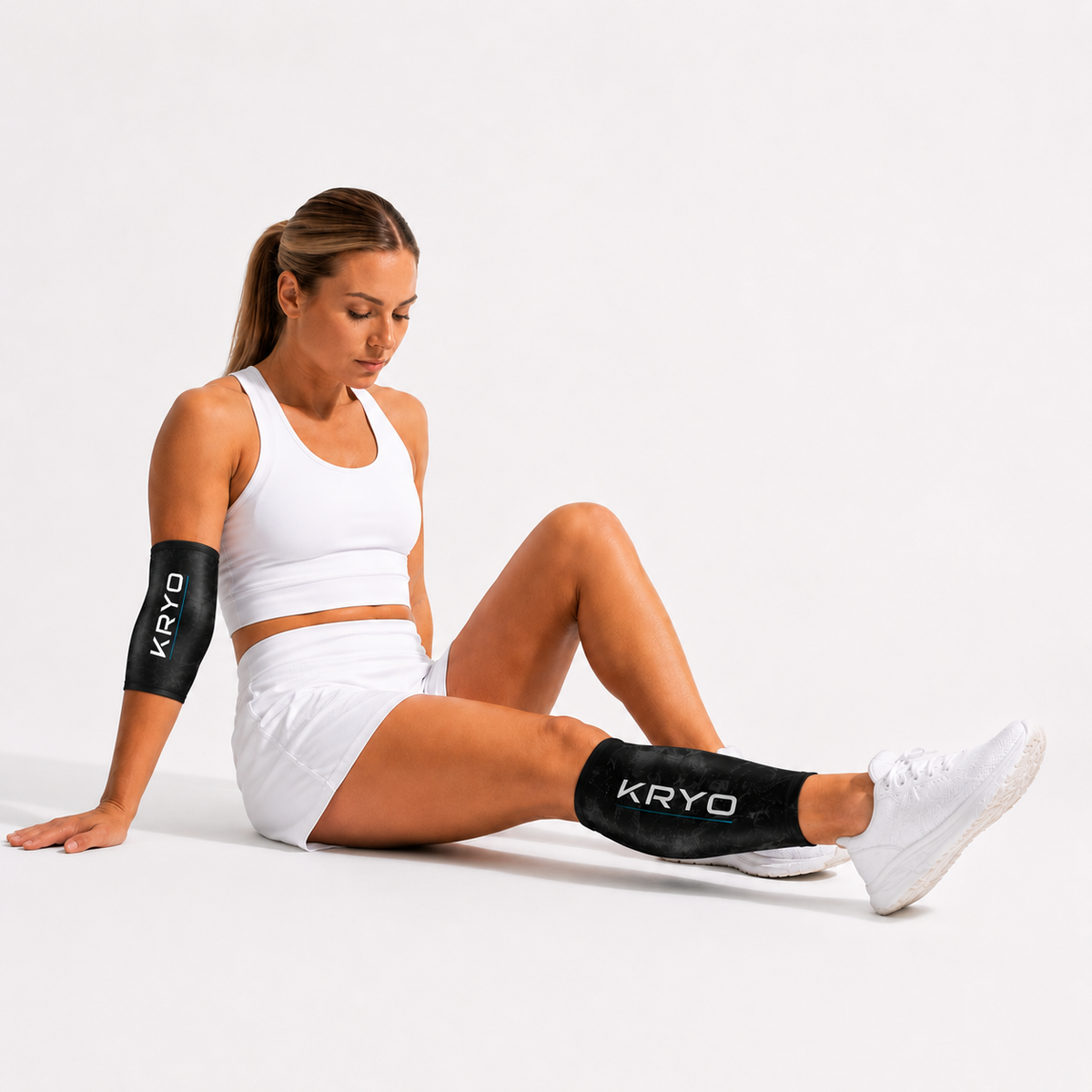
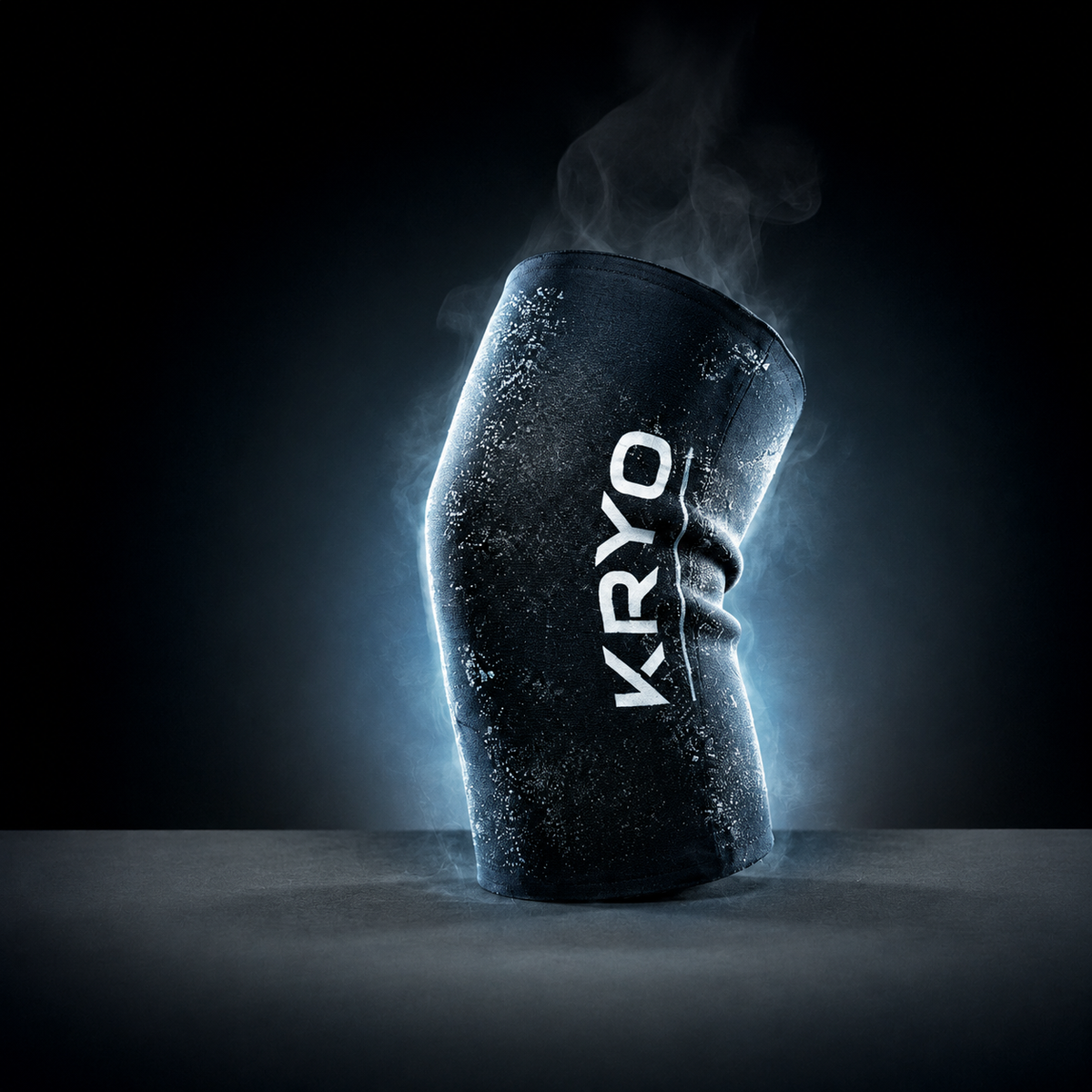
CORE combines extra-thick CryoGel with comfortable 360° compression, creating a wearable cold and heat sleeve that surrounds the targeted area.
KRYO CORE can be used as a:
- Knee ice pack
- Knee ice sleeve
- Knee compression sleeve
- Reusable knee gel sleeve
- Calf ice pack
- Cold compression sleeve
Rather than balancing a loose ice pack on your knee after training, CORE simply slides into position and stays there while you recover.
CORE or MAX for Your Knee?
For most people, KRYO CORE is the recommended starting point for the knee.
For larger legs or a roomier fit, KRYO MAX may also be suitable. MAX is primarily designed for the thigh, quad and hamstring, but its larger circumference means it can also fit around larger knees.
Check the KRYO Size Guide to find the best fit.
A More Convenient Way to Cool Your Knee
For people who incorporate targeted cooling into their recovery routine, having a reusable knee ice sleeve ready in the freezer can make things considerably easier.
No loose ice pack. No separate straps. No constantly repositioning it.
Just targeted cold and compression when your training is done.